
Why Do Some People Still Have Knee Pain After Knee Replacement?
Knee replacement surgery is performed to reduce severe knee pain, improve movement, and help patients return to their daily activities. Most people experience significant improvement after surgery, but some may continue to have knee pain after knee replacement.
This can be concerning, especially when a person expected the pain to completely disappear after surgery. However, some discomfort during recovery can be normal, while persistent or worsening pain may require evaluation by an experienced Knee Replacement Surgeon in Miraroad
Understanding the possible causes of pain can help patients know when they should seek medical advice.
Is Knee Pain Normal After Knee Replacement?
es, some pain after knee replacement is usually expected, particularly during the first few weeks and months. The muscles, tissues, and bones around the knee need time to heal and adjust to the artificial joint. If you have concerns about your recovery, consulting a Joint Replacement Surgery in Miraroad
can help determine whether your symptoms are part of the normal healing process.
Pain may occur after walking, exercising, climbing stairs, or bending the knee. Swelling and stiffness can also contribute to discomfort.
However, severe, persistent, or increasing knee pain after knee replacement should not be ignored. A Robotic Knee Replacement Surgeon in Miraroad can evaluate the cause of ongoing pain and recommend appropriate treatment based on your condition.
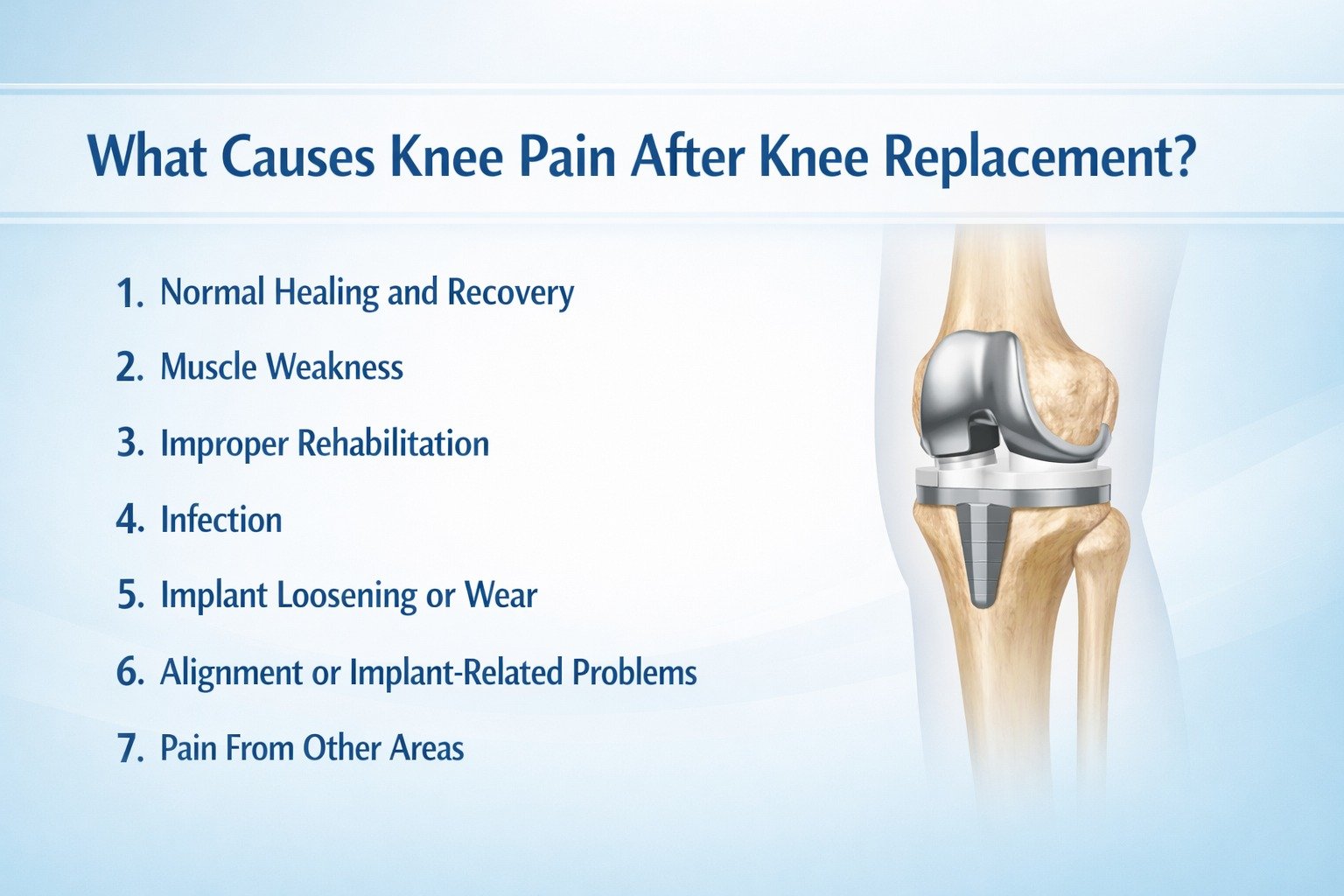
What Causes Knee Pain After Knee Replacement?
Several factors can cause continued pain after knee replacement surgery. Some common causes include:
1. Normal Healing and Recovery
The body needs time to recover after surgery. During the initial recovery period, patients may experience:
- Knee swelling
- Muscle weakness
- Stiffness
- Pain while walking
- Difficulty bending the knee
- Discomfort during physiotherapy
Following the rehabilitation plan and gradually increasing physical activity can support recovery.
2. Muscle Weakness
The muscles around the knee can become weak after surgery because of reduced activity. Weak thigh muscles, particularly the quadriceps, may make walking and climbing stairs uncomfortable.
Physiotherapy and prescribed strengthening exercises can help rebuild muscle strength and improve knee function.
3. Improper Rehabilitation
Physiotherapy plays an important role after knee replacement. Insufficient exercise may lead to stiffness and weakness, while doing exercises incorrectly or progressing too quickly may increase discomfort.
Patients should follow a rehabilitation program recommended by their surgeon or physiotherapist.
4. Infection
Although uncommon, infection can occur after knee replacement surgery. It may cause persistent pain, swelling, warmth, redness, fever, or discharge around the surgical area.
An infection involving an artificial knee joint requires prompt medical evaluation and treatment.
5. Implant Loosening or Wear
Over time, the artificial components of a knee replacement can loosen or wear. This may cause pain, especially while standing or walking.
If the pain develops months or years after surgery, an orthopedic evaluation may be required to determine whether the implant is functioning properly.
6. Alignment or Implant-Related Problems
The position and alignment of the artificial joint can influence knee function. In some cases, alignment issues or problems involving the implant may contribute to ongoing pain.
Modern surgical techniques, including Robotic Knee Replacement Surgery in Miraroad can help surgeons plan and perform knee replacement with greater precision in suitable patients.
7. Pain From Other Areas
Not every pain felt around the knee necessarily comes from the artificial knee joint. Hip, lower back, or nerve-related problems can sometimes cause pain that is felt around the knee.
A detailed clinical assessment can help identify the actual source of discomfort.
When Should You See a Knee Replacement Surgeon?
Patients should contact their orthopedic surgeon if knee pain:
- Becomes worse instead of improving
- Continues for an unusually long period
- Is associated with fever or chills
- Causes significant swelling or redness
- Makes walking increasingly difficult
- Appears suddenly after a period of improvement
- Is accompanied by instability or a feeling that the knee is giving way
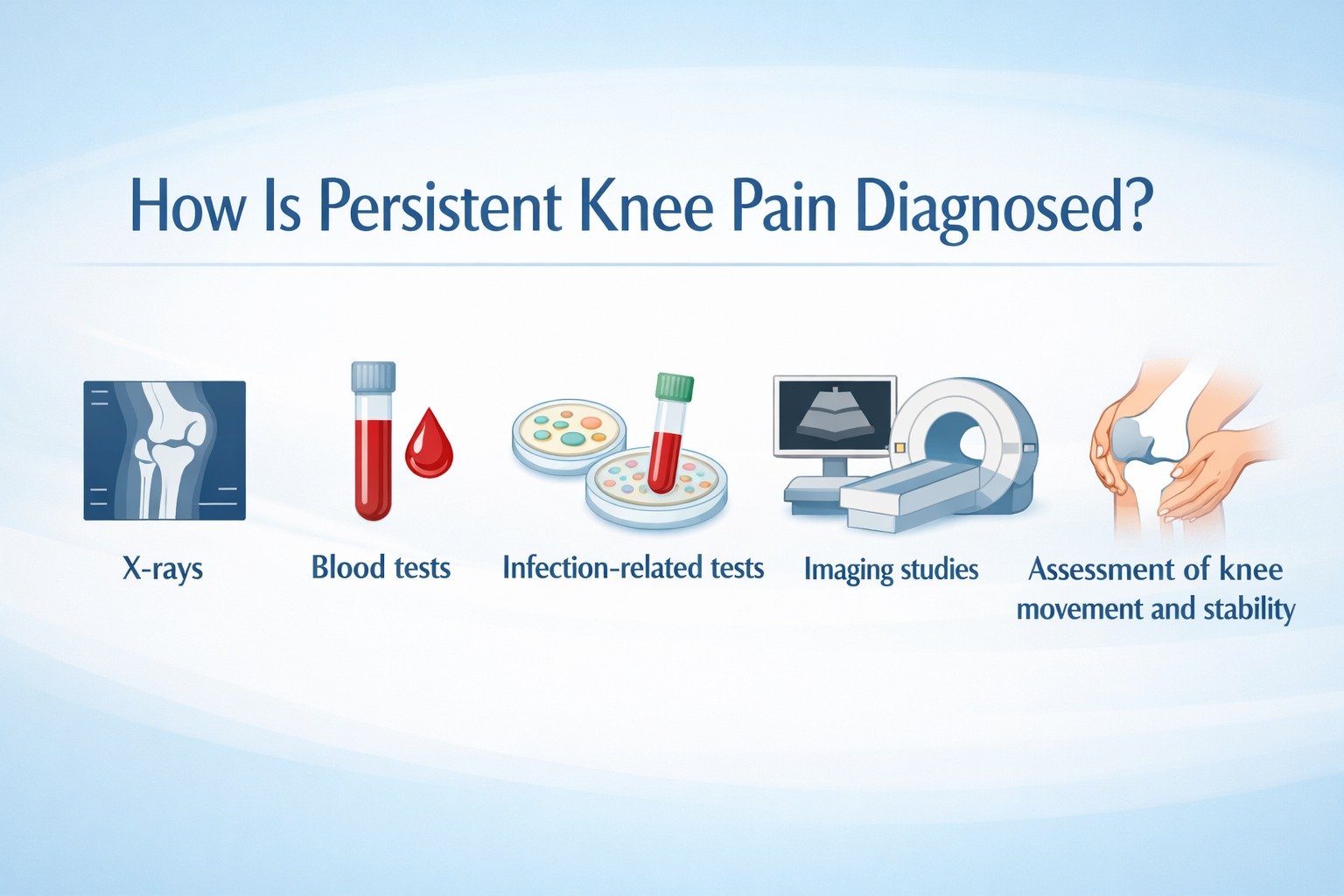
How Is Persistent Knee Pain Diagnosed?
A Joint Replacement Surgeon in Mira Bhayandar may evaluate persistent pain by reviewing the patient’s medical history and performing a physical examination.
Depending on the symptoms, the doctor may recommend investigations such as:
- X-rays
- Blood tests
- Infection-related tests
- Imaging studies
- Assessment of knee movement and stability
The treatment depends entirely on the underlying cause. Some patients may improve with physiotherapy, medication, activity modification, or other non-surgical measures. In selected cases, additional surgery may be considered.
Can Robotic Knee Replacement Reduce the Risk of Persistent Pain?
Robotic-assisted knee replacement uses advanced technology to assist the surgeon with pre-operative planning and surgical execution. It can help with implant positioning and alignment based on the patient’s individual anatomy.
However, robotic surgery does not guarantee a completely pain-free outcome. Recovery also depends on factors such as the patient’s overall health, implant selection, rehabilitation, muscle strength, and adherence to post-operative instructions.
If you are considering Robotic Knee Replacement Surgery in Miraroad discuss the potential benefits, limitations, and suitability of the procedure with an experienced orthopedic surgeon.
Choosing the Right Knee Replacement Surgeon in Miraroad
Choosing an experienced surgeon is an important part of knee replacement treatment. Patients should consider the surgeon’s experience with knee replacement procedures, approach to patient evaluation, surgical technology, and post-operative rehabilitation support.
A qualified Best Knee Replacement Surgeon in Miraroad can assess your knee condition, discuss suitable treatment options, and explain what you can realistically expect during recovery.
If knee replacement has been recommended, understanding the procedure and following the surgeon’s recovery plan can help support better outcomes.
Knee Replacement Surgery in Bhayandar and Miraroad
Patients looking for Knee Replacement Surgery in Bhayandar or nearby Miraroad can consult an experienced orthopedic specialist for an individualized assessment. The appropriate treatment depends on the severity of arthritis or joint damage, age, activity level, general health, and other factors.
Knee replacement is not simply about replacing the damaged joint. Successful recovery also involves pain management, physiotherapy, muscle strengthening, gradual return to activity, and regular follow-up.
Consult an Orthopedic Specialist
Persistent knee pain after knee replacement should not automatically be considered a normal part of recovery. While some pain and stiffness can occur during healing, ongoing or increasing symptoms may have an identifiable cause that requires treatment.
For more information about orthopedic treatments, you can also explore the Orthopedic Surgery services provided by Dr. Ronak Shah.
You can also find the orthopedic doctor to plan your visit.