

What Does the Way You Walk Say About Your Knee Health?
Have you ever noticed that you walk differently when your knee hurts? Maybe you start putting more weight on the other leg, take shorter steps, or avoid bending your knee fully. These changes may seem small, but What Does the Way You Walk Say About Your Knee Health? Your walking pattern, also called gait, can sometimes provide useful clues about pain, stiffness, weakness, or reduced movement in the knee.
Walking does not diagnose a knee problem by itself. However, changes in the way you walk may be a reason to pay attention to your knee health, especially when they continue or become more noticeable.
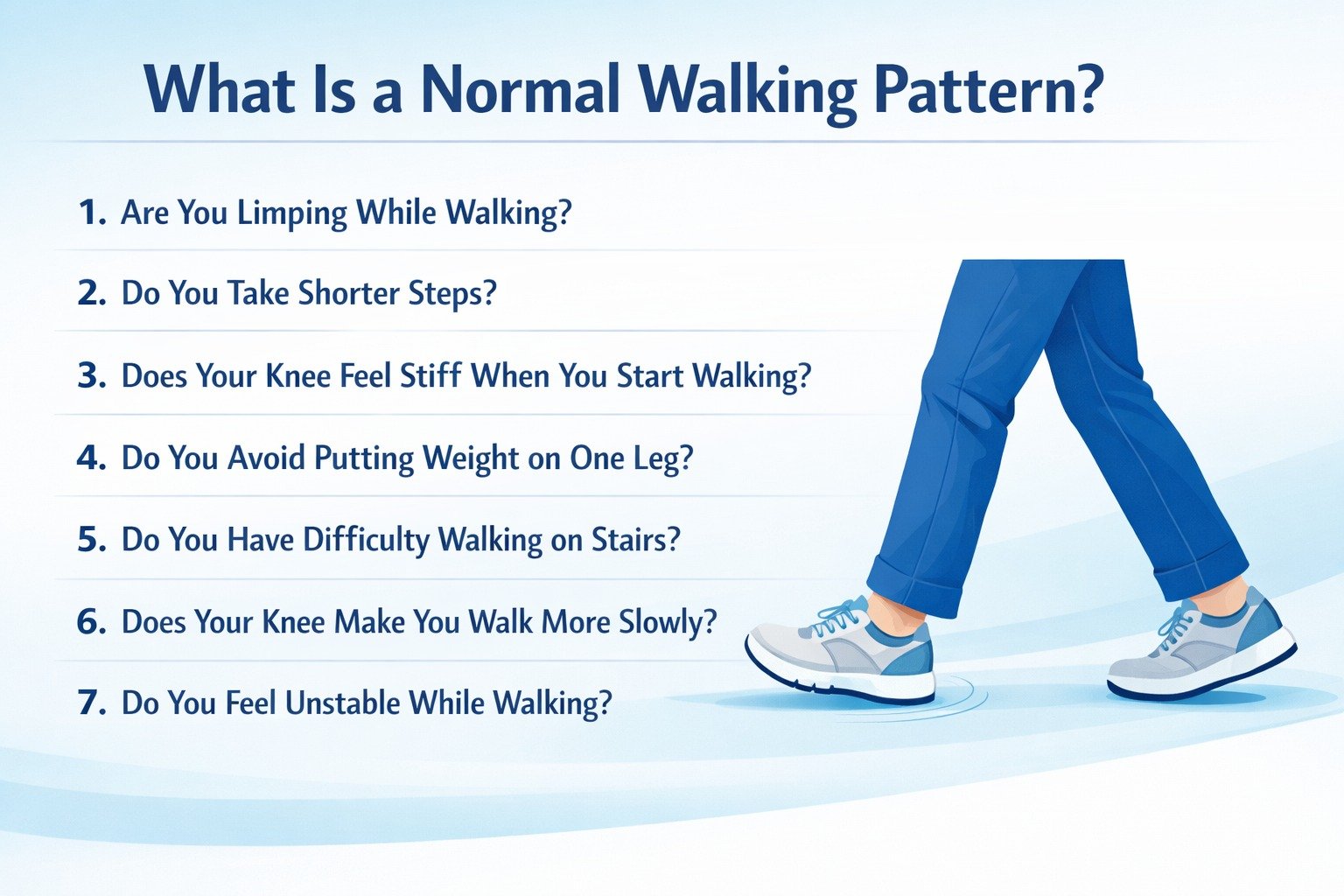
What Is a Normal Walking Pattern?
During normal walking, both legs work together to support your body, absorb impact, and move you forward. Your knees bend and straighten smoothly, while your hips, ankles, and feet also contribute to balanced movement.
When one knee becomes painful or stiff, your body may naturally try to protect it. This can change your walking pattern. You may unconsciously put less pressure on the painful side or rely more heavily on the opposite leg.
Over time, these changes may affect other joints and muscles as well.
1. Are You Limping While Walking?
A limp is one of the most noticeable signs that something may be wrong with your lower limb. If knee pain causes you to shorten your step on one side or shift your body weight, your walking pattern can become uneven.
A temporary limp after an injury may improve as the knee heals. But if you have been limping for weeks without an obvious reason, it is worth getting your knee evaluated.
Persistent limping can be associated with conditions such as knee arthritis, ligament problems, meniscus injuries, or other musculoskeletal issues.
2. Do You Take Shorter Steps?
People with knee pain may naturally take shorter steps because bending or straightening the knee can become uncomfortable.
For example, you may notice that you cannot comfortably extend one leg as far forward as the other. You may also feel that walking for longer distances has become difficult.
Shorter steps do not always mean that you have serious knee damage. However, when this change is accompanied by pain, stiffness, swelling, or difficulty with daily activities, an orthopedic assessment can help identify the underlying cause.
3. Does Your Knee Feel Stiff When You Start Walking?
Do your first few steps feel difficult after sitting for a long time?
Knee stiffness after inactivity is a common symptom associated with knee osteoarthritis. According to the American Academy of Orthopaedic Surgeons (AAOS), pain and stiffness are among the common symptoms of knee osteoarthritis, and symptoms can be worse after periods of inactivity.
If your knee repeatedly feels stiff when getting out of a chair, starting to walk, or getting up in the morning, do not simply ignore the pattern.
4. Do You Avoid Putting Weight on One Leg?
Pain can make you unconsciously shift your weight to the opposite side. You may notice that you stand more heavily on one leg or quickly move away from the painful side while walking.
This is your body’s natural attempt to reduce discomfort. However, consistently changing your weight distribution can place additional stress on other parts of your body.
If you have persistent knee pain that affects the way you stand or walk, an orthopedic doctor can assess your knee movement, muscle strength, alignment, and overall gait.
For professional evaluation and treatment options, you can learn more about Orthopedic Surgery offered by Dr. Ronak Shah.
5. Do You Have Difficulty Walking on Stairs?
Stairs can be particularly challenging when the knee is painful or weak. You may find yourself holding the railing, taking one step at a time, or avoiding stairs altogether.
Difficulty climbing stairs can occur with several knee conditions, including arthritis and problems affecting the muscles or structures around the knee.
If stair climbing has gradually become more difficult, especially when combined with knee pain or swelling, it is worth discussing the symptoms with an orthopedic specialist.
6. Does Your Knee Make You Walk More Slowly?
A slower walking speed can happen for many reasons. But if you have deliberately reduced your walking speed because your knee hurts, it may indicate that your knee is affecting your daily mobility. Consulting a Robotic Knee Replacement Surgeon in Kandivali can help identify whether an underlying knee condition is contributing to these changes.
Knee osteoarthritis develops gradually and may cause increasing pain and stiffness as cartilage becomes damaged. Pay attention to changes in your normal activities. If a short walk that was once comfortable now requires frequent breaks, your knee may need professional evaluation.
7. Do You Feel Unstable While Walking?
Some people describe their knee as “giving way” or feeling unstable while walking. This can make you cautious about taking steps, turning, or walking on uneven surfaces.
Knee instability can have different causes, including ligament injuries, muscle weakness, joint degeneration, or other structural problems. It should not automatically be assumed to be arthritis.
If your knee repeatedly gives way, especially if you have experienced an injury or fall, consult an orthopedic specialist.
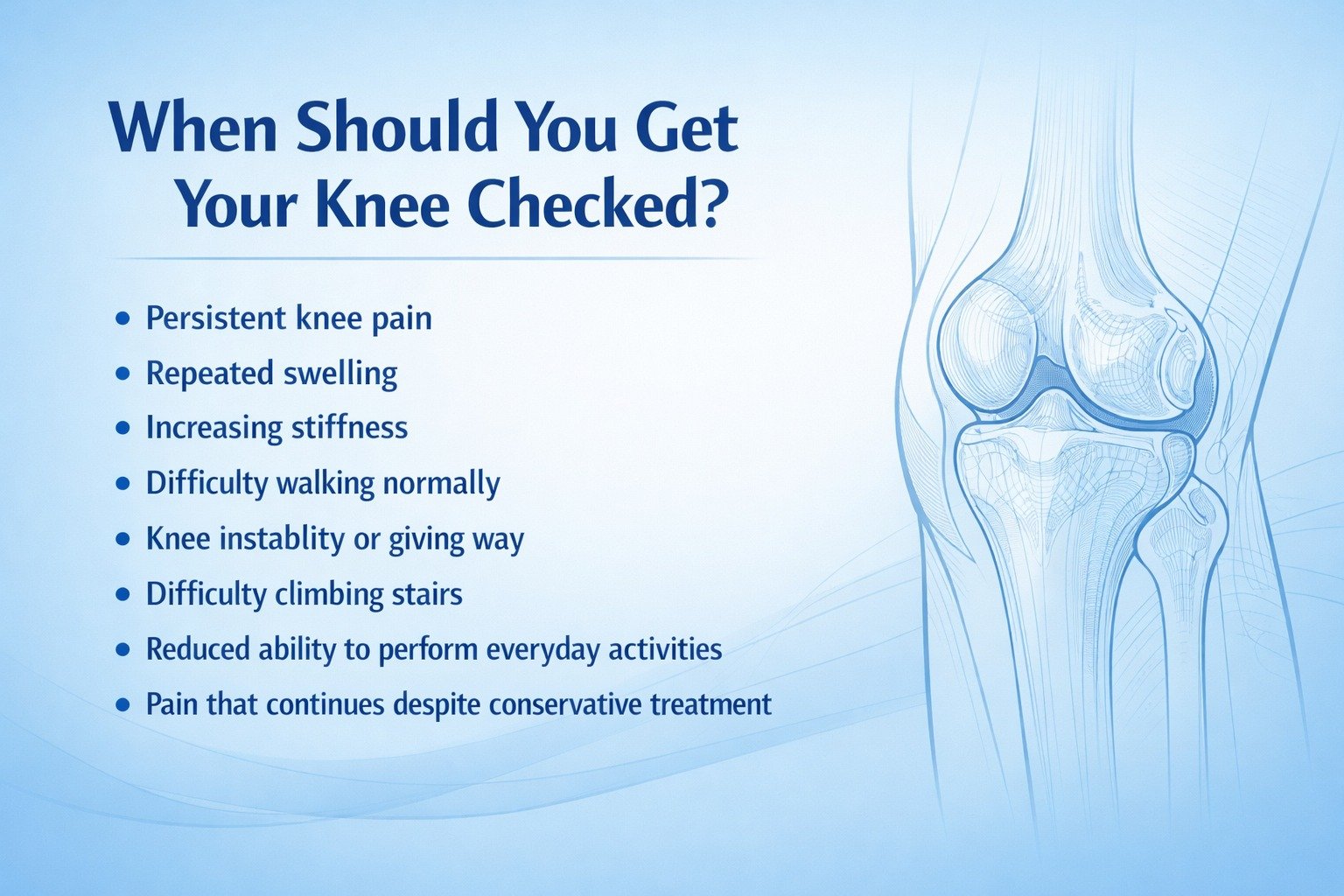
When Should You Get Your Knee Checked?
A change in walking pattern does not automatically mean you need surgery. Many knee problems can be managed with appropriate non-surgical treatments depending on the cause and severity.
However, consider an orthopedic evaluation if you experience:
- Persistent knee pain
- Repeated swelling
- Increasing stiffness
- Difficulty walking normally
- Knee instability or giving way
- Difficulty climbing stairs
- Reduced ability to perform everyday activities
- Pain that continues despite conservative treatment
Treatment depends on the diagnosis. Exercise, physical therapy, lifestyle changes, medications, injections, and other approaches may be considered depending on the individual situation. AAOS guidance also describes exercise and other non-surgical approaches among treatment options for knee osteoarthritis.
When Could Knee Replacement Become an Option?
Knee replacement is generally considered when severe knee damage causes significant pain and disability and other appropriate treatments have not provided enough relief. It is not recommended simply because someone walks differently.
If advanced knee arthritis has substantially affected your mobility and quality of life, an orthopedic surgeon can evaluate your symptoms, physical examination, and imaging to determine whether joint replacement may be appropriate.
For patients searching for Knee Replacement surgery in Kandivali discussing the condition with an experienced orthopedic specialist can help you understand the available treatment options.
Depending on the patient’s condition and suitability, options may include conventional knee replacement or Robotic Knee Replacement Surgery in Kandivali Robotic technology may assist the surgeon with planning and execution, but the right procedure depends on individual factors.
Can Walking Changes Be Prevented From Getting Worse?
You cannot prevent every knee condition, but maintaining healthy habits can support joint health. Staying physically active, maintaining a healthy body weight, strengthening the muscles around the knee, and addressing injuries early may help support mobility.
Do not push through severe or persistent pain simply to remain active. A suitable exercise program should match your condition and fitness level.
If you are searching for a Joint Replacement Surgeon in Kandivali or Joint Replacement Surgery in Kandivali it is important to have your knee properly assessed before deciding on any surgical treatment.
What Your Walking Pattern Can Tell You
Your walking pattern can offer clues about how your knee is functioning. Limping, shorter steps, stiffness, weight shifting, slower walking, difficulty with stairs, and instability can all indicate that your knee deserves closer attention.
However, walking style alone cannot determine the exact cause of a knee problem. A proper orthopedic evaluation is needed to understand whether symptoms are related to arthritis, an injury, muscle weakness, alignment problems, or another condition.
If knee pain is changing the way you walk or limiting your everyday activities, early evaluation may help you understand the problem and explore appropriate treatment options.
For people looking for the Best Knee Replacement Surgeon in Kandivali the first step should be a detailed evaluation rather than choosing surgery based only on symptoms. The goal should always be to identify the cause of the problem and choose the most suitable treatment for your knee health.